
In Real Life : Stitch the Gap
The surprising power of a sewing machine
When Trish and Amanda started a social enterprise sewing school, they had no idea of what it would grow into. The pair were concerned that sewing skills, particularly using sewing machines, would be lost in the next generation- so Amanda, a trained dressmaker, started running sewing classes in her community centre with six local children. A few years later, the social enterprise has grown into a busy workshop teaching thousands of sewing classes per year, to a huge variety of people.
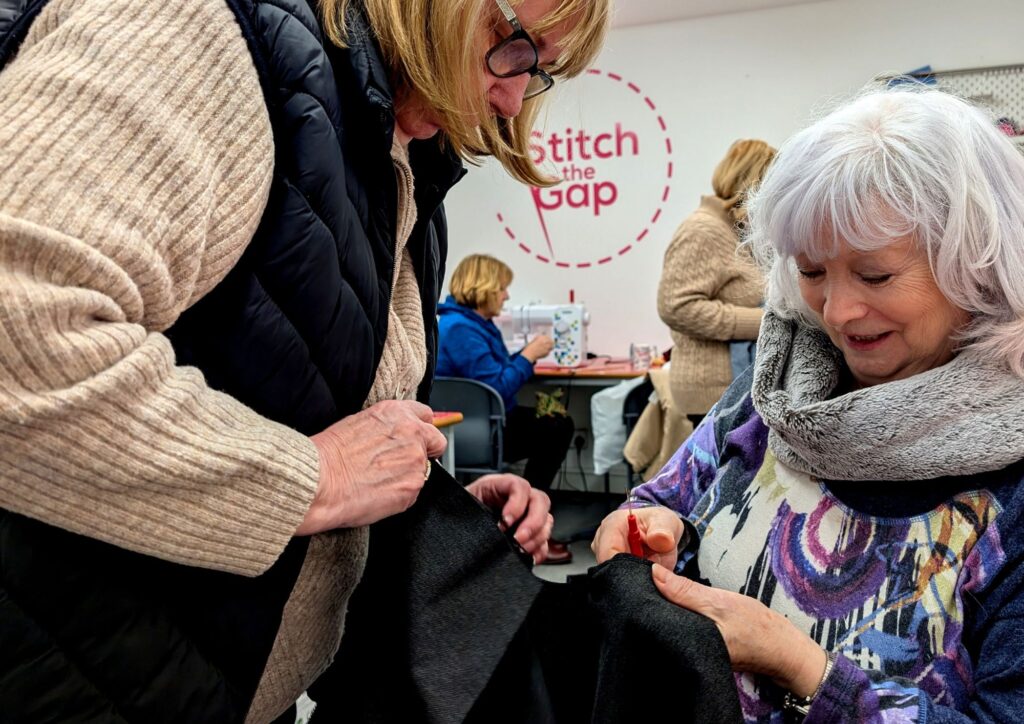
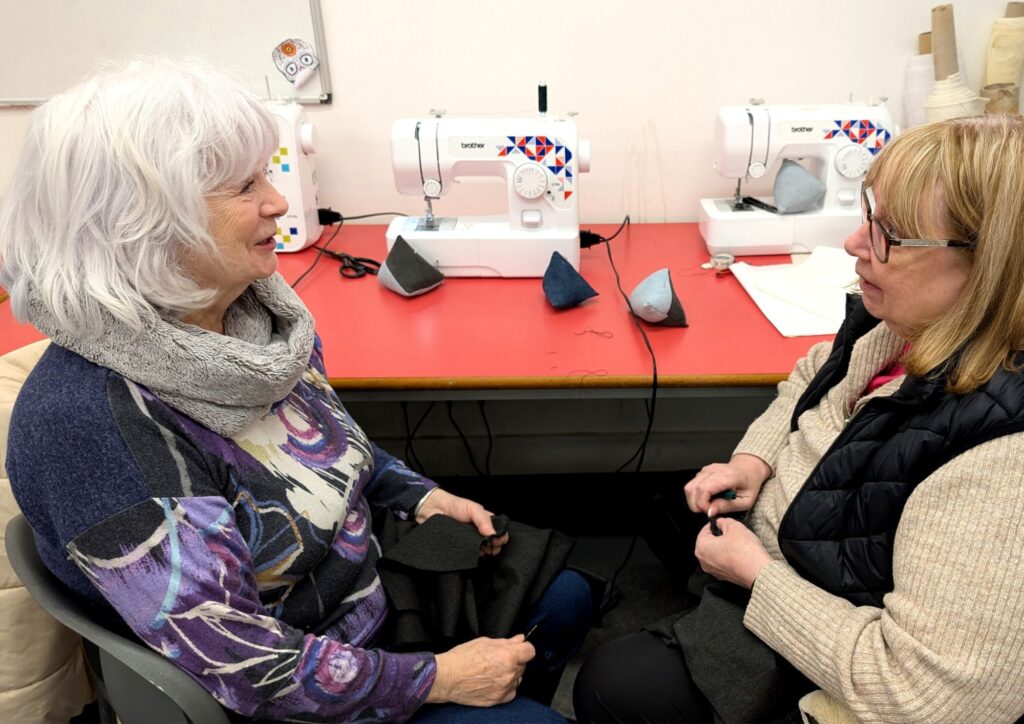
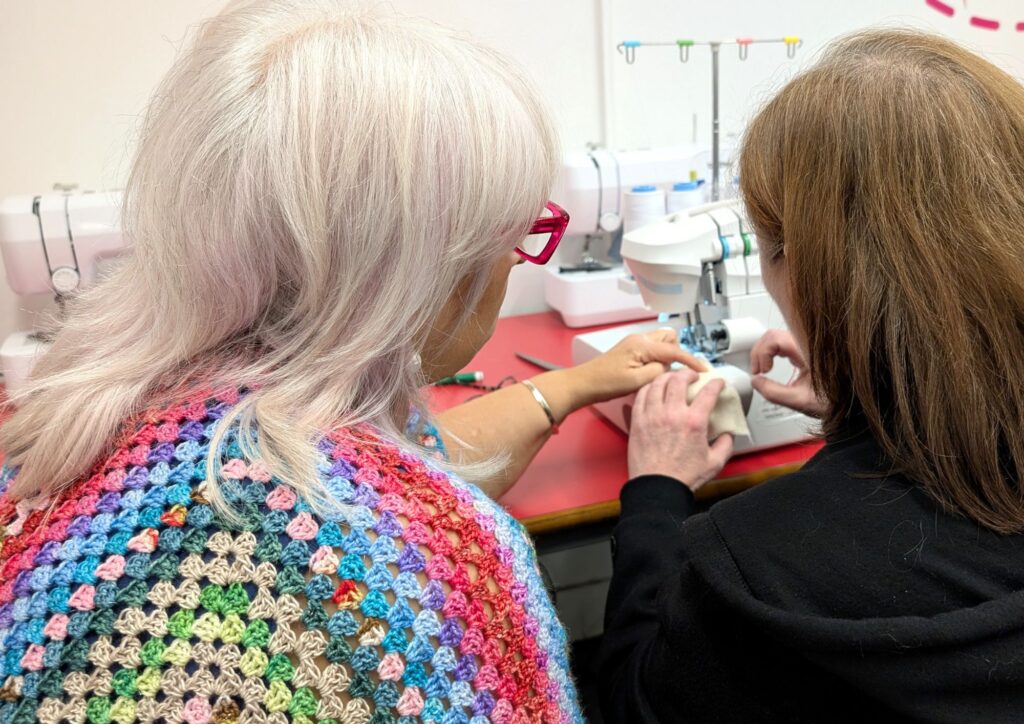
The sewing school has also become a warm community and a vital mental health resource, offering classes specifically for vulnerable groups such as carers, women who have experienced violence, and grieving families. “It’s a life saver, it got me back on my feet,” said Sadie, who attends weekly classes with her son Andrew. Andrew had suggested the class to his mother when she was struggling to recover from an operation; and the pair have never looked back. Sandra came to Stitch the Gap three years ago to repair her mother’s old sewing machine, decided to take lessons, and now volunteers every week. She describes her volunteering day as “heaven”. “Most people come here for their mental health,” she says.
Credit - Sarah McArthur
Credit - Sarah McArthur
Credit - Sarah McArthur
What to do with six tonnes of fabric?
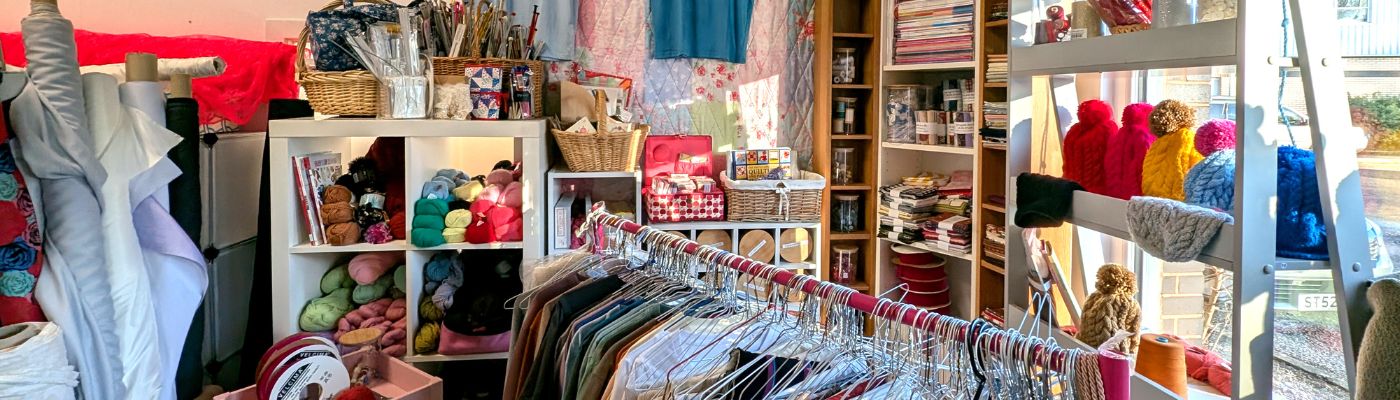
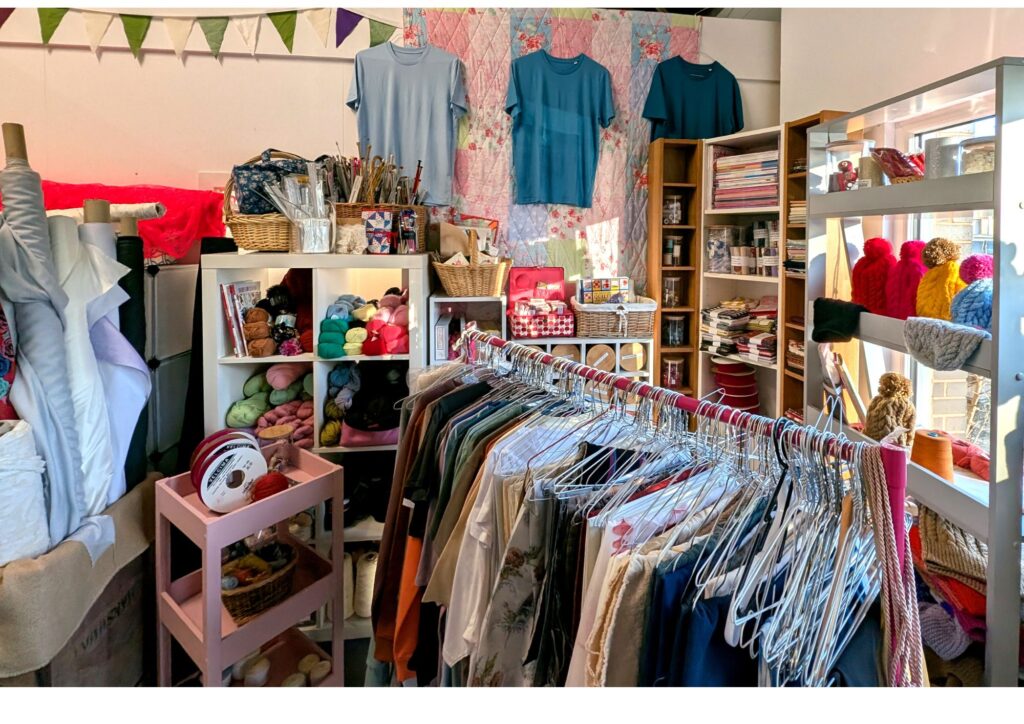
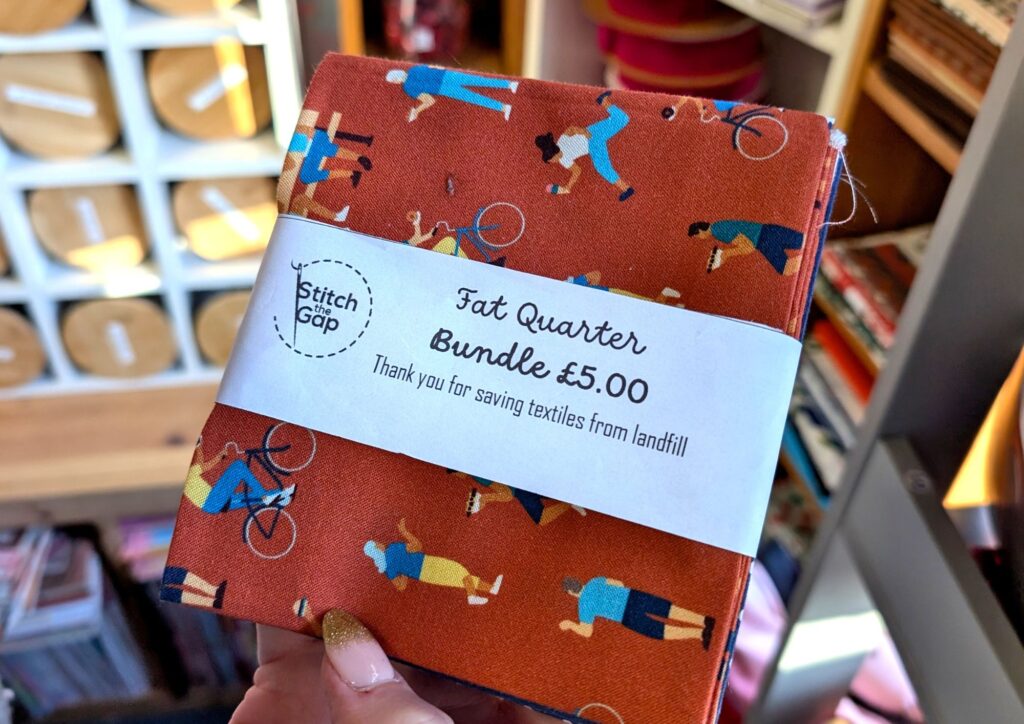
As the organisation grew, Stitch the Gap began receiving donations of fabric from the community to support their work. This was great for keeping the costs of classes down- they have so much donated fabric that they’ve been able to open a scraps shop, selling fabric at very cheap prices while still generating income for the company. This helps to subsidise the free classes which Stitch the Gap offer for those who can’t afford the normal price for their classes. And as anyone who has tried buying new fabric will know, providing cheap fabric and materials goes a huge way to making sewing accessible to anyone in the community, regardless of their income.
Using and selling this second-hand fabric also saves it from ending up in landfill. Walking around their premises in Kirkintilloch, almost everything you see is second-hand; from fabric and thread to an enormous cutting table which was rescued from a local factory when it closed down. The social enterprise recently accepted the leftover fabric from the producers of Outlander; over 1 tonne of fabric from a single series. To date, Trish estimates that the organisation has saved 6 tonnes of fabric from landfill.
Credit - Sarah McArthur
Credit - Sarah McArthur
Credit - Sarah McArthur
Reviving skills for a sustainable economy
By promoting the skills of making and mending, Trish and Amanda are also challenging the waste in our clothing industry. In the UK, an estimated 350,000 tonnes of clothes go to landfill every year. Amanda, who has sewn all her life, was shocked to learn that her friends were throwing shirts away because a button had fallen off. “Is that the point we’re at where we’re so throwaway that just because a button’s missing it’s done? We cannae let that go on, but there’s a way round it and there’s a way that is enjoyable and fun,” says Amanda.
Many of the adults who attend Stitch the Gap came to the charity because they had sewing machines, leftover from the older generation where sewing was a common skill; and they needed to either fix them or wanted to put them to use. And in an incredible stroke of luck, one of the first workshop leaders who was hired by Stitch the Gap is also one of a handful of remaining sewing machine mechanics.
Tracy left school initially wanting to be a car mechanic; but ended up being one of only four women in the UK who qualified as a sewing machine mechanic instead. Unfortunately, a few years later the textiles industry in Scotland collapsed, and Tracy moved into other kinds of engineering. Now, running a fixing workshop in the Stitch the Gap premises, she gets to use her rare skills.
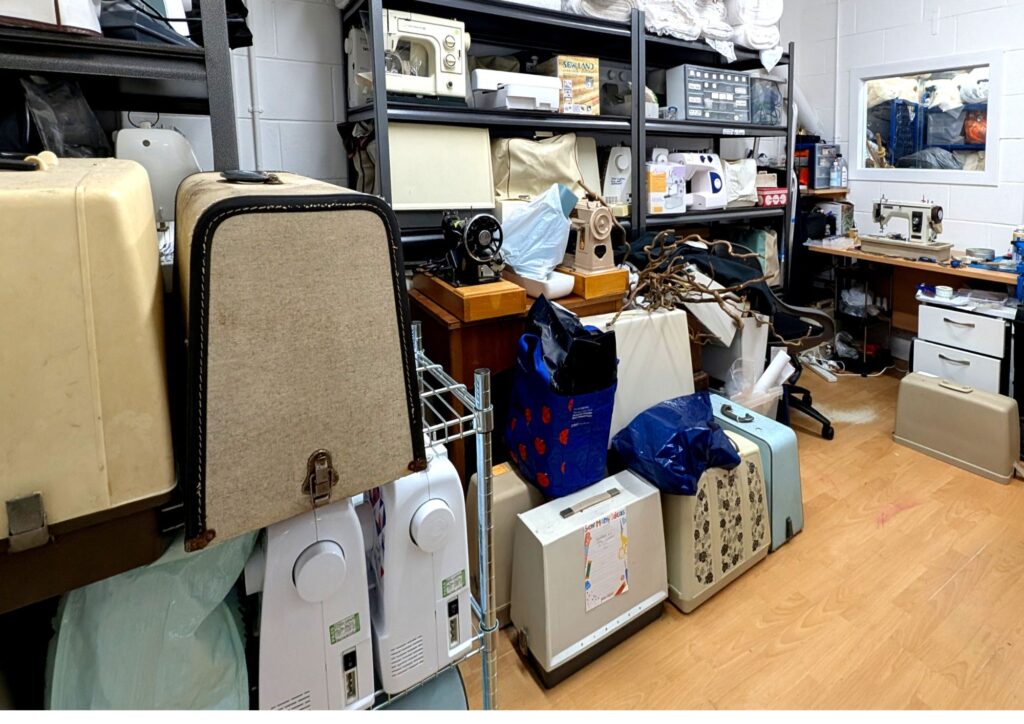
Tracy“I’ve come full circle,” she says, “this was always what I loved doing.” Tracy’s workshop is full, floor to ceiling, with sewing machines from new electric machines to hundred-year old hand cranked Singers. Most can be fixed and returned to their owners; the rest are broken down to provide parts for other machines- nothing goes to landfill.
While repair cafes and fixing workshops are popping up across Scotland, Tracy has noticed that many fixers are lost when a sewing machine comes into their workshop. Although all kinds of sewing machines have the same basic mechanics, you need to know what a healthy machine sounds like to bring a sewing machine back to life. In 2026, Tracy will be designing and giving training in sewing machine maintenance- bringing back another essential skill to combat waste in our communities.
Scotland has a very proud history in textiles and clothing- and Trish, Amanda and the Stitch the Gap team have been incredibly successful in bridging the gap between this heritage and the needs of modern society. Along the way they are teaching a new generation that throw-away isn’t the only option, and equipping them with the skills to keep their belongings out of landfill.