In Real Life: Forth Valley Sensory Centre
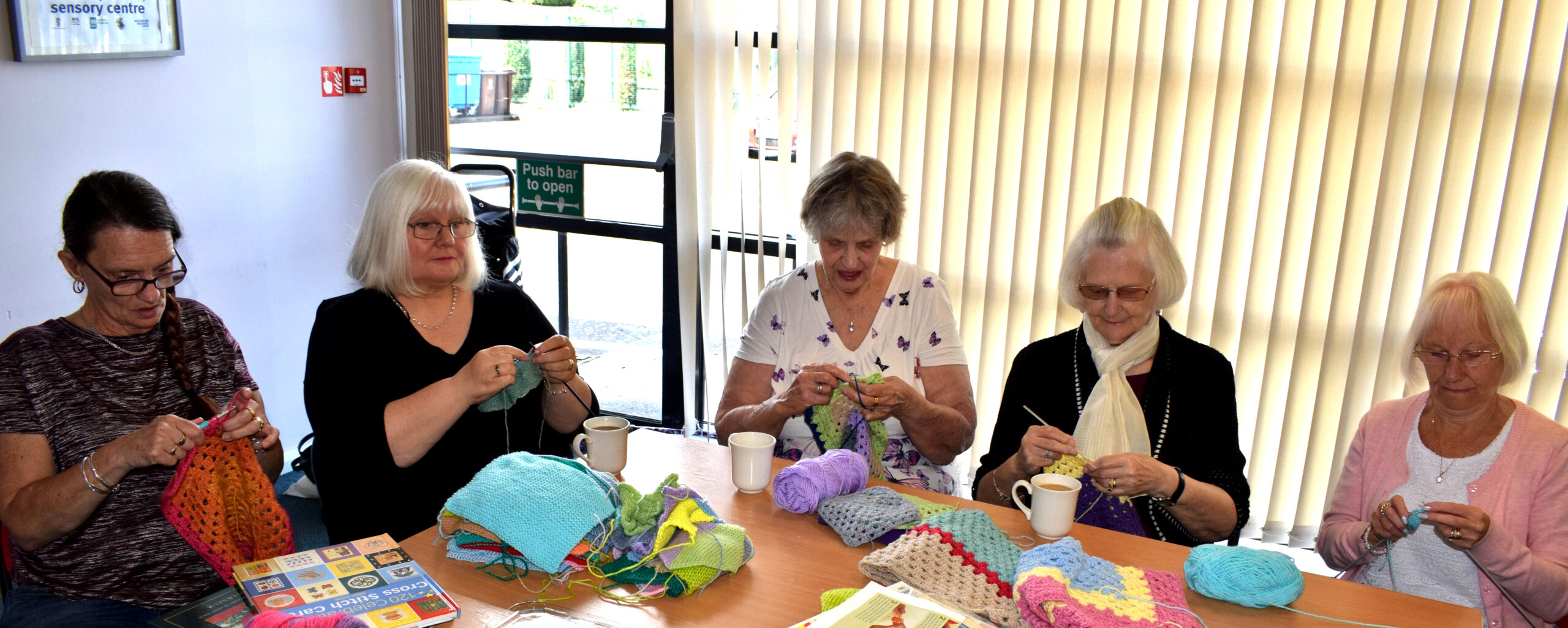
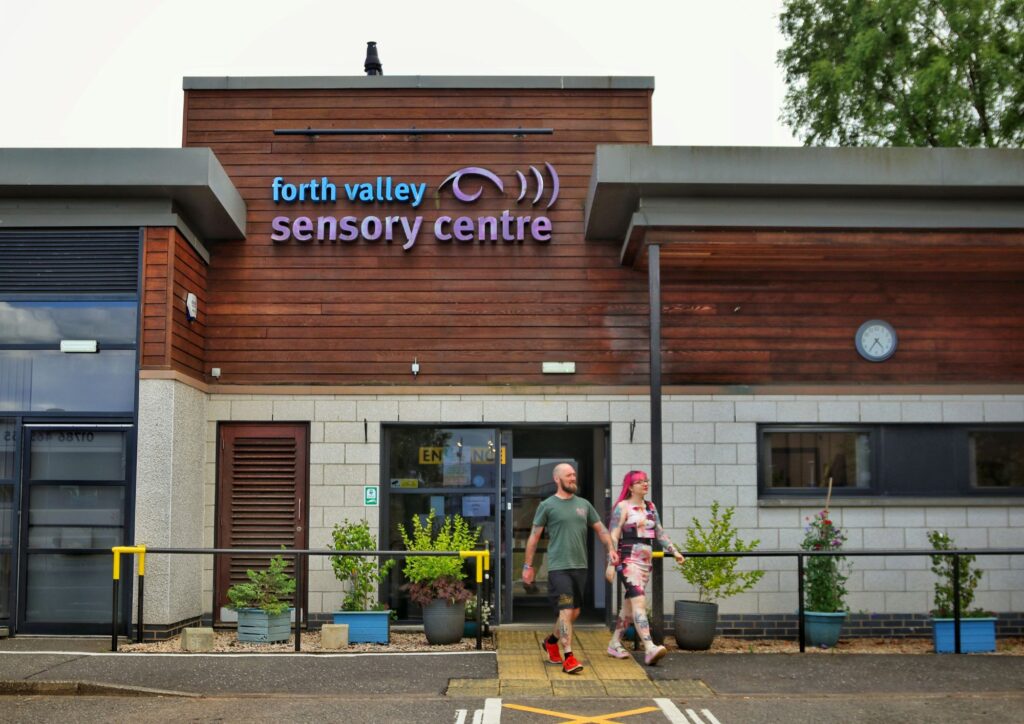
Forth Valley Sensory Centre is a registered charity, about to celebrate twenty years of supporting people with sight and/or hearing loss. The centre itself is a large and dynamic building; hosting a lively community cafe, sensory gardens, NHS FV and council services and over thirty community groups, from the Sensory Singers choir to yoga classes, inclusive and accessible for people with sensory loss.
Tackling access issues in climate action
“We’re not new to climate work,” explains Jacquie Winning (MBE), chief executive of FVSC. In 2021 the charity won SCVO’s Climate Conscious Award for its Making Sense of Energy project, to raise awareness of climate issues within the sensory loss community, and work to make the climate movement more accessible to people with sight or hearing loss.
Jacquie Winning (MBE)“What we found [when we started talking about climate] was that within the world of sensory loss, a lot of messages about climate get missed because they’re not made to be accessible,” Jacquie explained. For example, at that time, there was no BSL sign for “carbon footprint”.
Working closely with Forth Environment Link, FVSC have produced materials and advice for climate-related organisations to make their messaging and their physical spaces more accessible to the sensory loss community. A climate comic which was made with children from Windsor Park school for deaf children became a nationwide success. FVSC, together with FEL Scotland, is now collating a map of climate organisations whose buildings are tried-and-tested to be inclusive to those with hearing or sight loss.
Making messages accessible hasn’t led to an immediate wave of enthusiasm for climate action among FVSC’s community. Just like in any other group of the Scottish population, climate is a tough topic to broach. “It’s a slow burn,” says Jacquie, “initially I thought everybody’s going to love this, but no, it’s taken time and repeat messaging, now if we get 2 or 3 people that’s a huge success, because we hope that they’ll go and tell 2 or 3 more.”

Credit - Forth Valley Sensory Centre
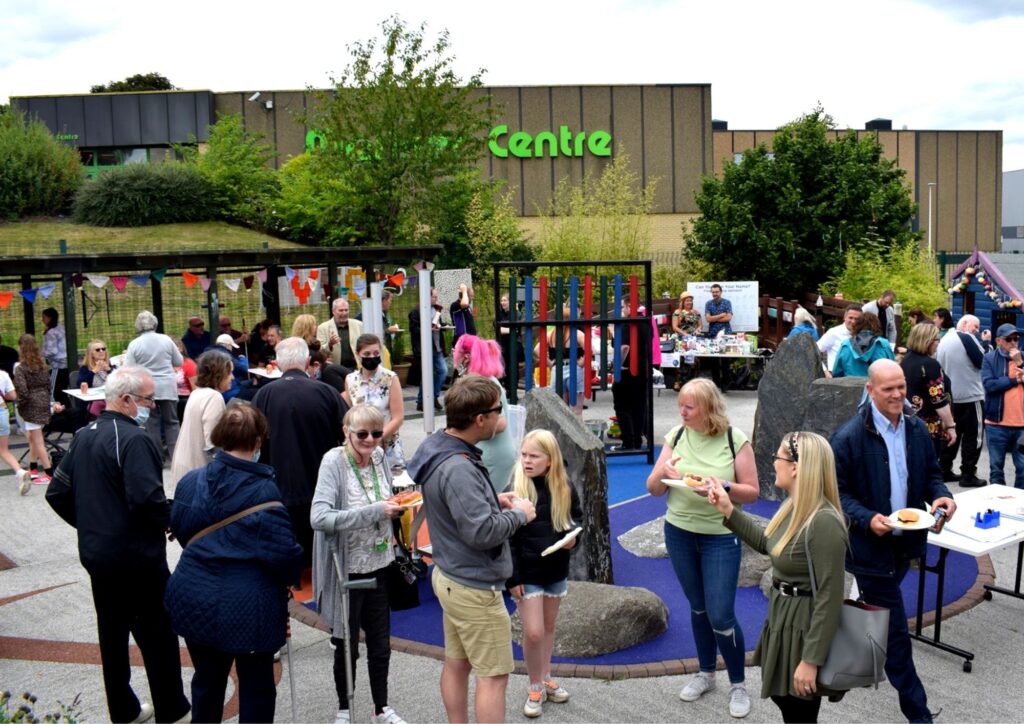
Credit - Forth Valley Sensory Centre
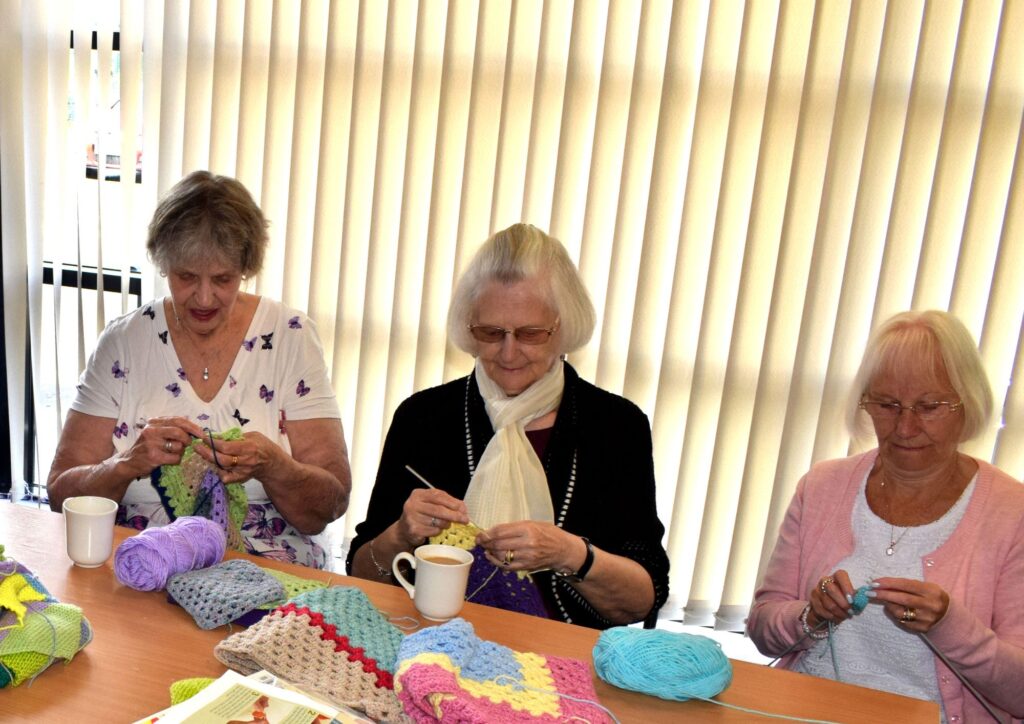
Credit - Forth Valley Sensory Centre
Tackling energy consumption without spending millions
The inevitable challenge for any organisation wanting to consider its climate impact is energy consumption. By the winter of 2022 FVSC’s decades-old heating management software, locked away on an ancient PC in a cupboard, was not cutting it and bills were rising. It was struggling to cope with the needs of dozens of users in the dozens of rooms across the building.
FVSC didn’t have millions in funding to gut the building and replace the heating system and insulation. So as a first step to solving the problem, FVSC joined a pilot project with Scottish Startup Prioto, who was developing technology to help small- to medium sized enterprises and organisations stay on top of their energy use. Prioto placed temperature sensors around the building to understand where the charity’s energy was actually going, and discovered that a huge volume was being wasted on unnecessary heating. Some of this was accidental; an unknown setting to heat the hallway to 27 degrees over the weekend, or broken radiator dials which were stuck at full blast while confused office workers sat by open windows in their inexplicably roasting room.
Another source of waste, paradoxically, was people feeling too cold. If a group of centre users, staff or guest organisations, entered a cold room they might turn the heating on to full to try to heat up faster. When the room inevitably became sweltering, the windows would be opened to let heat out- the room’s users might or might not remember to turn down the heating at the same time. This wasn’t ignorance or malice, of course, but a result of a failing heating system being used by busy people; “When the control system is old and hidden away and not accessible to use, people are doing other jobs, they easily forget.” says Campbell Millar from Prioto. This also wasn’t a problem unique to FVSC: Campbell has found the same behaviour patterns in dozens of organisations across Scotland.
Prioto set up a new energy management system, based on a simple app, that allows FVSC staff to easily plan and control the heat in each room of the building. Jacquie and her team devised a heating policy, communicating with building users and staff the temperature range that rooms would be kept at while they were in use. The only new heating technology was infra red ceiling tiles; these were relatively cheap to install and can control the temperature much more accurately than traditional radiators.
This change in how FVSC manages their heating decreased FVSC’s energy use by a whopping 60%. Switching some of the heating from gas radiators to electric infra red ceiling tiles means the carbon footprint of the building will be reduced by an even higher percentage. After a really successful pilot project with FVSC which cut bills by over 50%, Prioto are now providing this same service for organisations across Scotland, from village halls to international airports.
Campbell MillarCampbell has found the same pattern all over; if teams are motivated to change the way they manage their energy, they can see reductions of at least 40% without spending hundreds of thousands on insulation, heat pumps and solar panels.
The power of behaviour change
Individual behavioural change is not the whole solution to climate change, but it is an important part. Around 15-20% of FVSC’s reduced energy consumption was simply down to staff members changing their own behaviours- this only happened when they had the information and the tools to support those different behaviours. People living with sensory loss, too, can’t make changes to their lives unless they have access to the information, resources and places which help the rest of us to make changes to our lives.