In Real Life: Dumfries and Galloway Swift Network
What is a swift caller and how is it bringing swifts and people together across Dumfries and Galloway?
Our hosts, Sarah, Kaska and Chiara join Andrew Turney on a journey to meet swifts, swift brick pioneers and hear about how networking and collaboration turned a small group of swift enthusiasts into a rapidly expanding multi-partner Dumfries and Galloway Network.
Join us on our visit with Andrew by listening below or read more about this inspiring story below below.
Swifts are remarkable birds.
Swifts are remarkable birds. With a scientific name Apus apus meaning “without feet” in Greek, these birds only land when they are in their nests, spending up to ten months at a time in flight. During those ten months away from the nest, Swifts travel from the UK to forests of Central Africa, returning north via the forests of Liberia, covering 14,000 miles every year. When they do return to their small nests, these precision long-distance flyers swoop through the nest entrance at up to 40 miles per hour. And this feat of nature is relatively easy to see in person, as Swifts often nest in small holes in the walls or eaves of buildings.
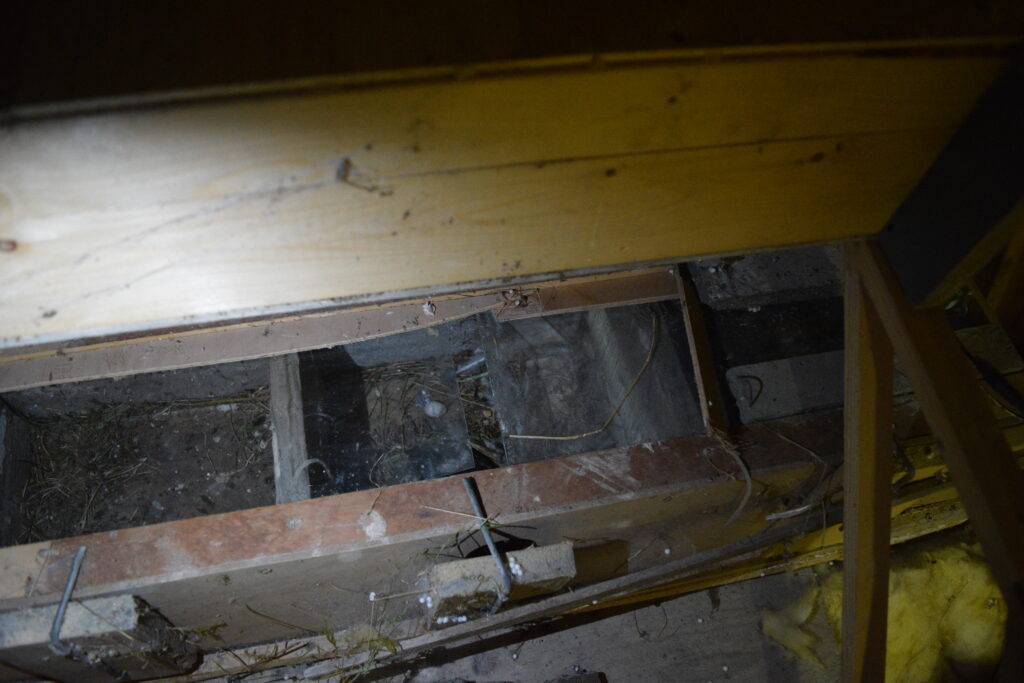
Arthur, for example, watches Swifts pass by his window every day. The 91-year-old bird enthusiast and joiner became interested in attracting Swifts to nest in his house after he retired. In around 2010 he designed his own Swift bricks - large bricks with a cavity and a small entranceway, perfectly dimensioned for a Swift to nest in, which he placed just underneath the roof of his home while he was extending it. He even installed a tiny camera and a transparent top on some of his Swift bricks, so that a quick trip up to the loft allows for he or his wife Kathy to observe the Swifts, totally unbothered, while they nest over summer.
Andrew Turney““Arthur is amazing. He got into Swift conservation probably 30 years ahead of everybody else and… made Swift bricks before Swift bricks had been heard of,”
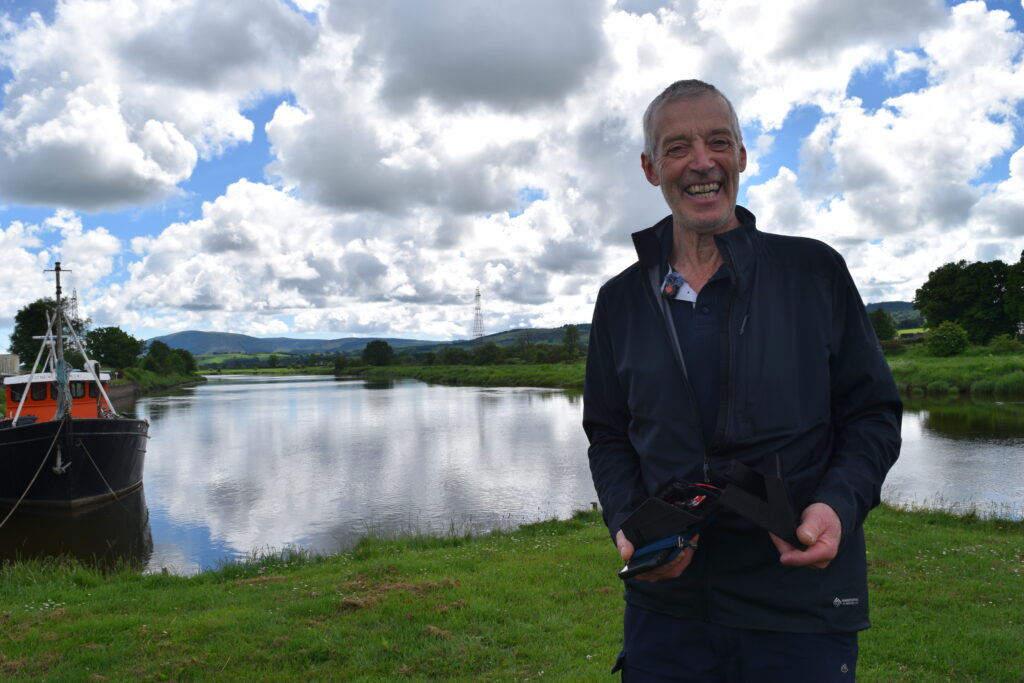
Andrew was part of a group of local ornithologists who created the Dumfries Swift Group in 2024, to promote Swift conservation in and around Dumfries. The group started in response to a local tragedy that reflected a global issue. In Dumfries, the renovation of a local hotel led to around a hundred Swift nests being closed off - across the UK Swift numbers have also plummeted; “since the late 1990s their numbers in the UK have gone down by about 70%, and that's largely down to building refurbishment,” says Andrew.
Thankfully, attracting Swifts these days doesn’t require specialist knowledge and making your own bespoke bricks these days as there is a wealth of support across the country. Swift boxes can be easily attached to the outside of buildings- as long as there are already some fellow Swifts nearby, a Swift box makes for an attractive home for young Swifts looking for a nest.
In 2024, Andrew recruited twelve others from the Dumfries Scottish Ornithology Club who set out making and distributing Swift boxes. Keen to get moving, Andrew put in £250 of his own money to get the group going. The group sourced some plans to build Swift boxes from a men’s shed in Cumbria and got to work.
From local group to regional network
However a year later, the grassroots group came up against a common issue; “in the autumn of 2024, we had a really hard decision because the 13 had dwindled to four of us… And so over that autumn and winter, I thought, "How can we succeed?" And it suddenly struck me that we ought to work with people who it was part of their professional job,” says Andrew.
Andrew began contacting larger, more established organisations; contact with the regional wildlife recording group led to contacts with Galloway and South Ayrshire UNESCO Biosphere Partnership, which led to contact with the local Climate Hub, then the RSPB, the World Wildlife and Wetlands Trust, and even a local prison, where prisoners were able to construct Swift boxes for distribution to local communities. The network also includes lots of small hyper-local Swift conservation groups, taking the strain off the small group of founders; “we’re concentrating on making small groups in each area where they can actually work with each other, support each other. We're not trying to do everything in all the places ourselves,” says Andrew. This year, the Swift Network has been able to concentrate on becoming a SCIO (the formal charity status in Scotland)- this opens up many more opportunities for funding and partnerships in the future.
Inventive solutions
Another key partnership has been with various different Men’s Sheds- not only for traditional carpentry, but for some innovative electronics too. Installing swift boxes is great if there are already Swifts nesting nearby, but what if you’re starting from zero? “Swifts are birds that love to be in communities and are very social. So when they call, they get attracted to the other Swift calls, and it brings them in. By playing a Swift caller attracts the birds to the new nest sites,” explains Andrew.
Swift callers small speakers which emit Swift calls at natural-sounding intervals, to attract Swifts to a new spot. These devices are often expensive and cumbersome to use - they have to be fixed at the same height as Swift boxes, but also wired into a power source, and controlled to make sure the Swift calls are going out at the right times of day. But through a collaboration with Sanquhar Men’s Shed, the Dumfries and Galloway Swift Network have been working on a cheaper and easier to use Swift caller.
This Swift caller is 3D printed, has a solar panel and a backup battery, and can be controlled remotely from a smart phone. This means that after it’s in place it can be left alone to do its job of attracting Swifts. “They're just an amazing little bit of kit and could transform Swift conservation if we can get them off the ground.” says Andrew.*
What next?
As time goes on and climate change progresses, the need for Swift conservation will only increase. Climate change poses threats to all migratory birds, and a new wave of well-needed home renovations to help insulate our homes will also specifically impact Swift nests.
Looking forward, Andrew and the Swift Network have plenty to be getting on with; counting the existing Swift nests to establish a baseline, building their network of Swift conservation groups, and engaging with the construction industry to install Swift boxes in new build properties and protecting colonies in existing buildings when refurbishment is undertaken.
The Natural Environment Act of 2026 gave the Scottish Government the power to require Swift bricks to be built into certain new developments, which is great progress. But Andrew would also like to see attitudes change to help maintain and grow the numbers of Swifts in Scotland: “communities valuing their wildlife so that they're wanting to do that support and conservation and seeing a place in their world for some of the natural world that we live next to,” he says.
Andrew Turney“Personally, I feel if a bird can take the trouble to go to Africa and come back and see us, the least we could do is make a space for it to nest and breed.”
*Unfortunately, since we met Andrew at the Sanquhar Shed has not had capacity to embark on stepping up production of the solar PV callers alongside their other activities. This is disappointing for the Dumfries Swift Group from the swift conservation point of view, however the Swift Group said that they respect the decision made, and if there is a future decision to continue with the caller project they look forward to teaming up again.